Description
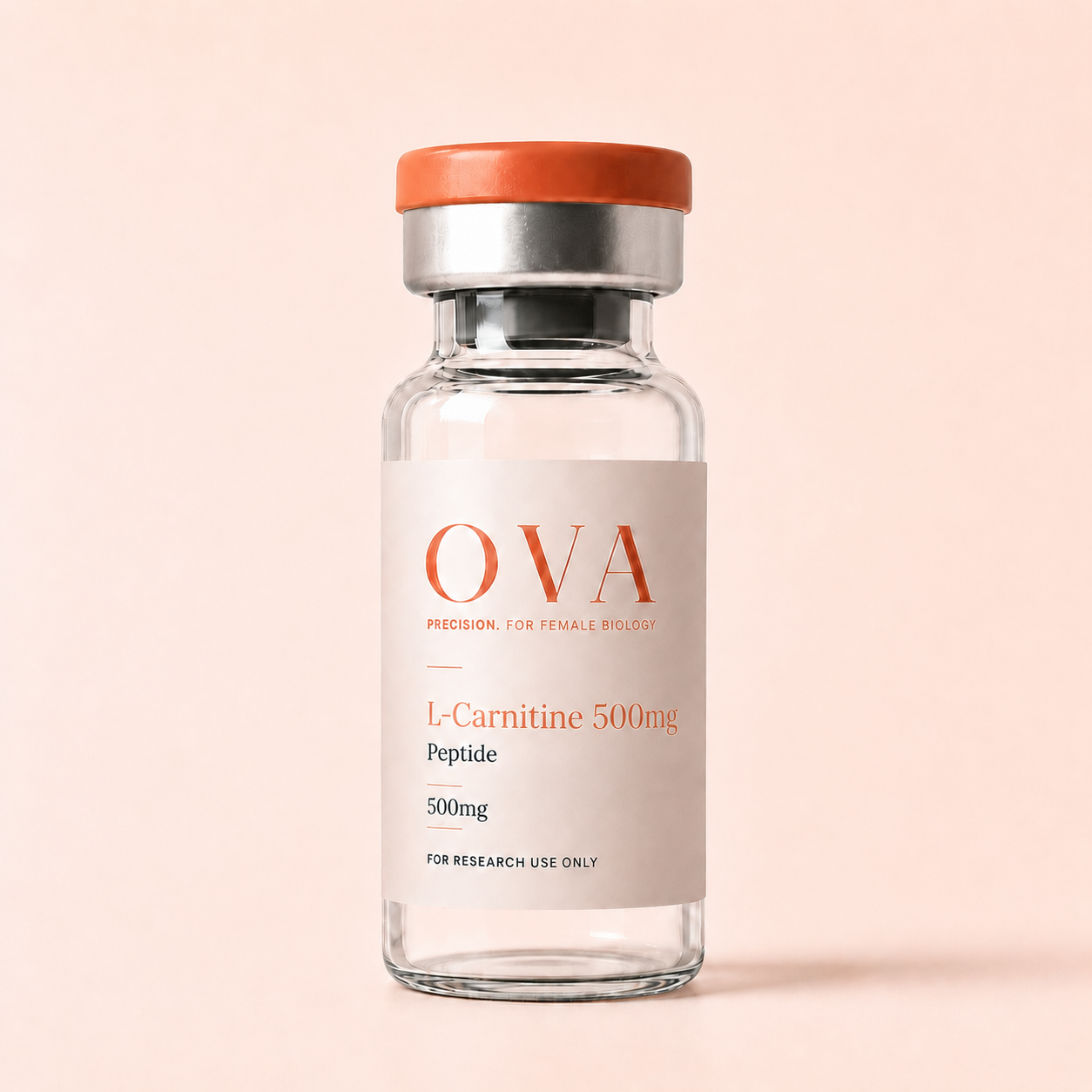
L-Carnitine is a quaternary ammonium compound synthesized from lysine and methionine that serves as the essential shuttle for long-chain fatty acyl groups into the mitochondrial matrix for beta-oxidation. Without adequate carnitine, fatty acids accumulate in the cytoplasm and cannot be converted to ATP — meaning fat is present but cannot be burned. This transport function is rate-limiting in fat oxidation, making carnitine availability a genuine metabolic bottleneck, not just a minor cofactor.
For women, carnitine’s relevance is both metabolic and reproductive: carnitine plays a role in oocyte energy metabolism (mitochondria in eggs are carnitine-dependent), and carnitine deficiency has been associated with impaired ovarian response and reduced embryo quality. Metabolically, carnitine supports the fat-oxidation side of any body composition protocol — it doesn’t drive fat loss on its own, but it removes a rate-limiting step in the pathway. Stacked with GLP-1 agonists (which reduce dietary caloric intake) and GH secretagogues (which increase fat mobilization), injectable L-Carnitine ensures the mobilized fat can actually be transported into mitochondria for oxidation.
Female-calibrated dosing: 500mg–2000mg intramuscularly or IV 3–5x/week. Injectable form achieves 2–5x higher tissue concentrations than oral supplementation. For fat oxidation protocols, administer pre-exercise or in the morning. Can be combined in the same syringe as many other water-soluble injectable compounds.
Storage: Store at room temperature. Refrigerate after opening if liquid formulation. Use within 30 days of opening.




Reviews
There are no reviews yet.