Description
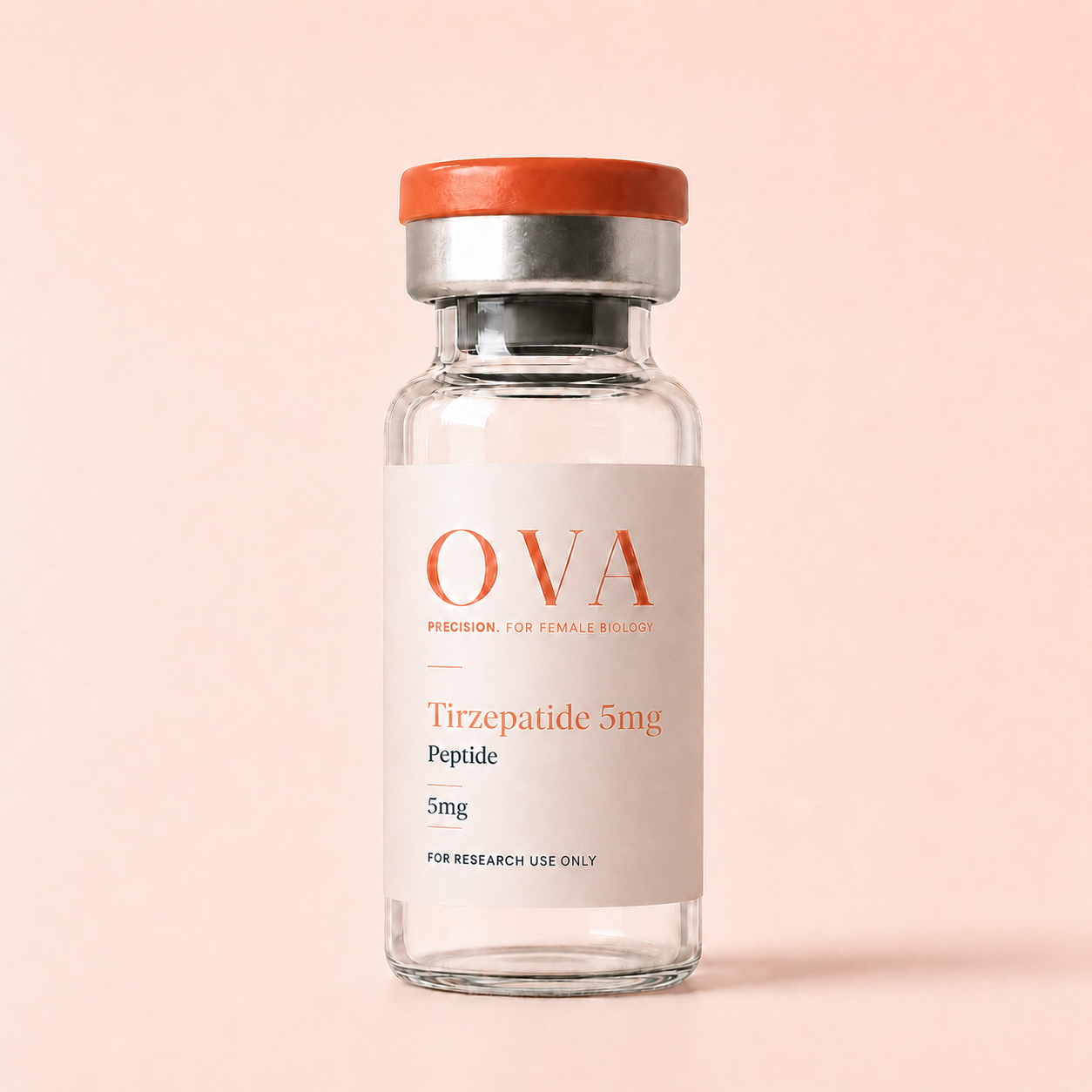
Tirzepatide activates both GLP-1 (glucagon-like peptide-1) and GIP (glucose-dependent insulinotropic polypeptide) receptors. GLP-1 agonism suppresses appetite, slows gastric emptying, and improves insulin sensitivity. GIP agonism enhances the insulinotropic response and — critically — acts directly on adipose tissue to improve lipid metabolism and energy partitioning. Together, these two pathways produce synergistic fat loss that outperforms either mechanism alone. In clinical trials, average fat loss at 72 weeks was 20.9% of body weight.
Female metabolism is governed by estrogen, progesterone, and cortisol in ways that directly affect where fat is stored and how resistant it is to reduction. Visceral adipose tissue — the metabolically active fat around the abdomen and organs — is particularly responsive to GIP receptor signalling. For women in perimenopause or post-menopause, when estrogen withdrawal causes preferential visceral fat accumulation, tirzepatide’s dual mechanism specifically targets this pattern. It also improves insulin sensitivity independent of weight loss, which is relevant for women with PCOS or insulin-resistant patterns.
Female-calibrated dosing: Start at 2.5mg once weekly for 4 weeks, titrate to 5mg. Do not titrate faster than every 4 weeks. Most women find their maintenance dose between 5–10mg weekly. Starting lower and titrating slowly reduces GI side effects significantly. Inject subcutaneously into abdomen, thigh, or upper arm. Rotate injection sites.
Storage: Store lyophilized powder below -20°C. After reconstitution with bacteriostatic water, refrigerate at 2–8°C and use within 28 days. Do not freeze reconstituted solution. Protect from light.



Reviews
There are no reviews yet.