Description
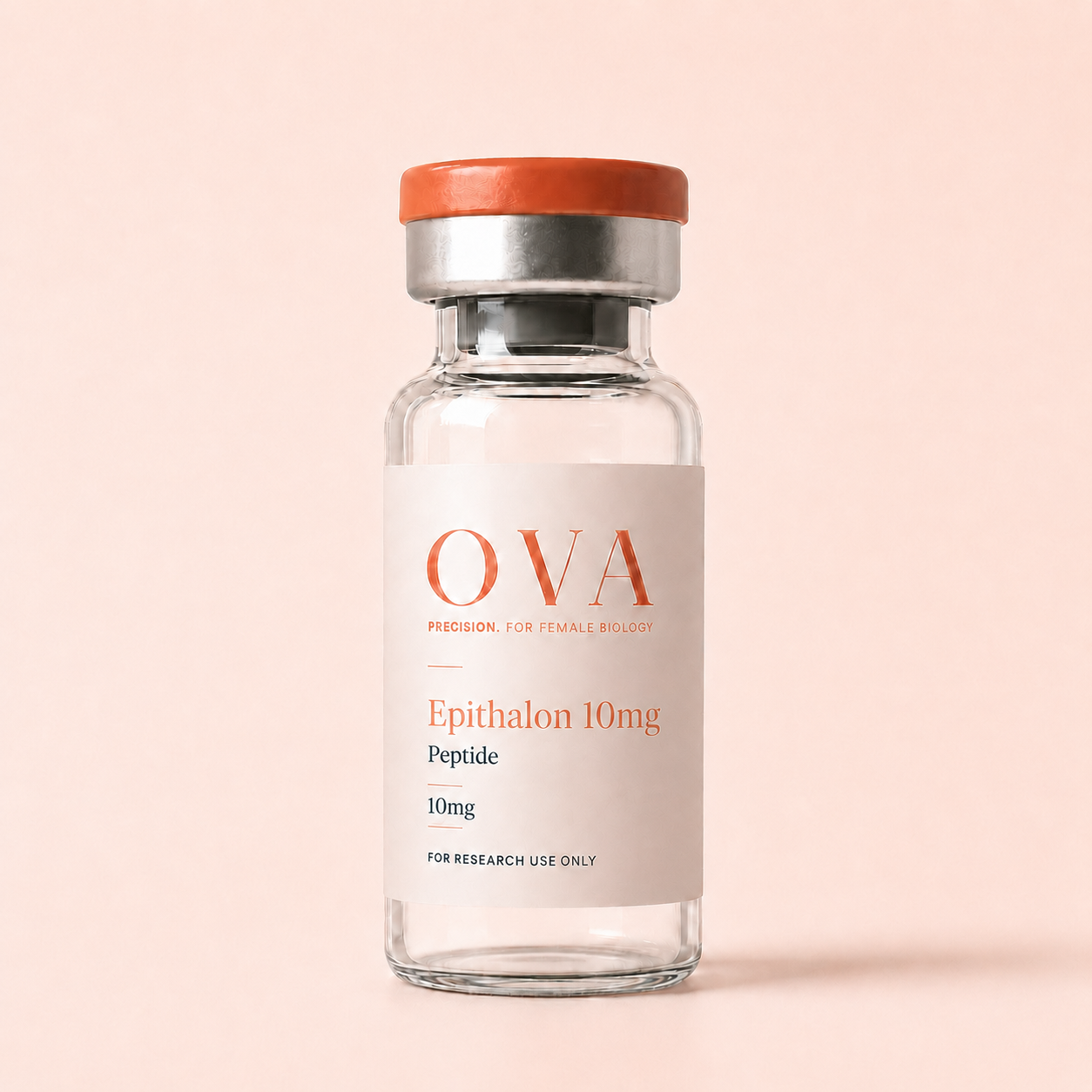
Epithalon (Ala-Glu-Asp-Gly) is a synthetic analogue of epithalamin, a polypeptide produced by the pineal gland’s epithelium. Its primary studied mechanism is telomerase activation — the enzyme that adds telomere repeat sequences to chromosome ends, protecting against replicative aging. Telomere shortening is now understood as one of the hallmark mechanisms of cellular aging, and epithalon is the most studied peptide with direct evidence of telomerase activity in human cells.
In women, telomere attrition accelerates significantly in the perimenopausal and post-menopausal period, correlating with declining estrogen levels (estrogen has its own weak telomerase-activating effect). Epithalon addresses this mechanism directly, independent of estrogen status. Beyond telomere biology, epithalon has demonstrated antioxidant effects, regulatory influence on circadian rhythm, and reduction in oncogene expression — making its longevity profile multidimensional. Russian research spanning four decades shows consistent life-extension effects in animal models and some human cell data.
Female-calibrated dosing: 5–10mg per day subcutaneously for 10-day cycles, repeated 2–4x per year. This pulsed approach mirrors how the original research protocols were conducted. Some women run 10-day “epithalon bursts” in spring and autumn. Continuous use is not recommended — the value is in cyclical activation.
Storage: Store lyophilized powder below -20°C. After reconstitution with bacteriostatic water, refrigerate at 2–8°C and use within 20 days.



Reviews
There are no reviews yet.