Description
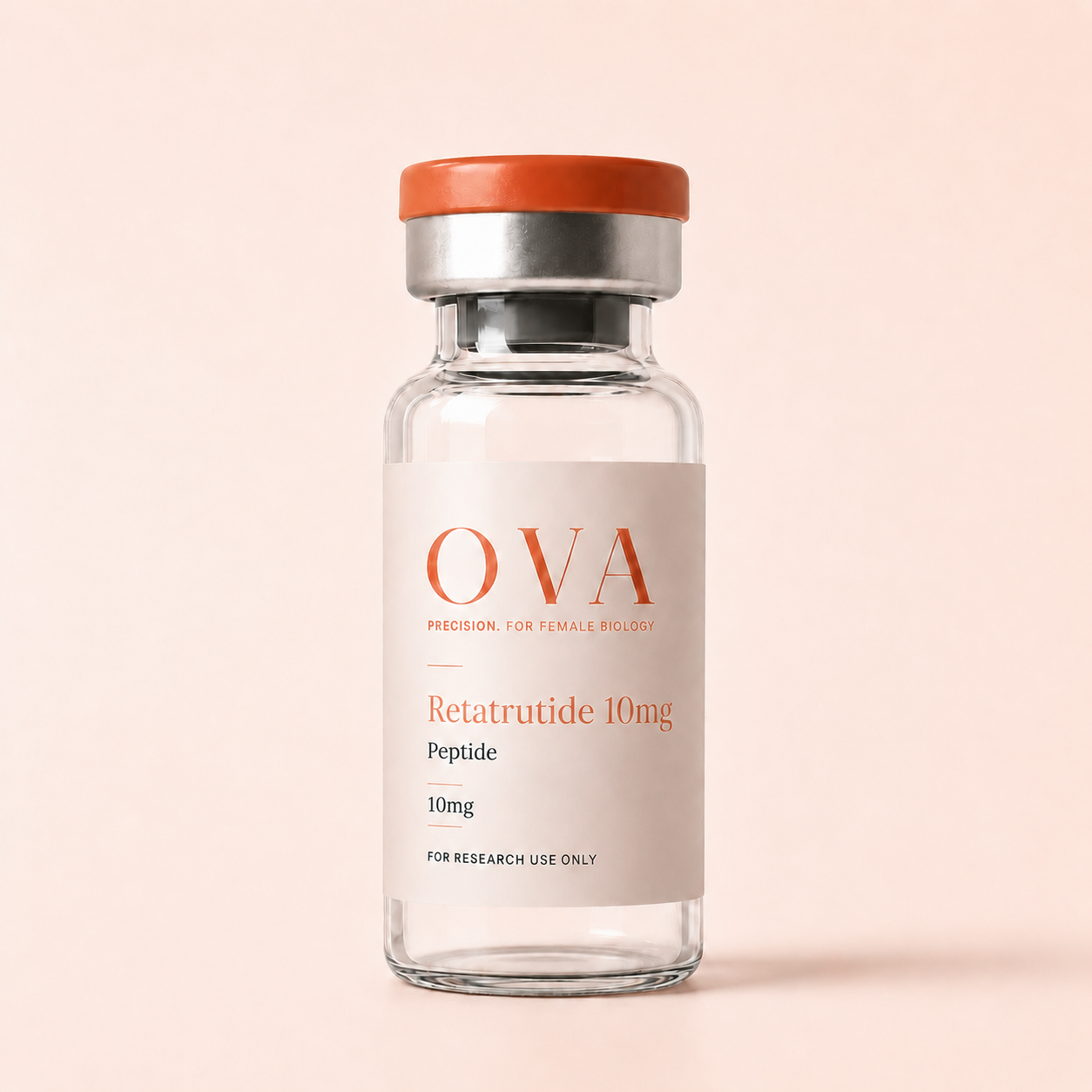
Retatrutide adds glucagon receptor agonism to the GLP-1/GIP dual mechanism of tirzepatide. Glucagon receptor activation dramatically increases energy expenditure by stimulating hepatic glucose production, enhancing fat oxidation, and raising basal metabolic rate — effects that are largely independent of appetite reduction. This means retatrutide addresses body composition from three directions simultaneously: appetite suppression (GLP-1), adipose tissue metabolism (GIP), and energy expenditure (glucagon).
For women, the glucagon component is particularly relevant. Female metabolism tends toward energy conservation — an evolutionary adaptation that, in the context of modern dietary abundance and hormonal changes, contributes to disproportionate fat accumulation. Glucagon receptor activation directly counteracts this conserved metabolic tendency. In Phase 2 data, participants on 12mg retatrutide lost an average of 24.2% body weight — the highest reported in any obesity pharmacology trial. For perimenopausal women dealing with visceral fat accumulation resistant to diet and exercise, this triple mechanism represents a meaningful shift in what’s achievable.
Female-calibrated dosing: Start at 2mg weekly for 4 weeks, titrate by 2mg every 4 weeks to a target of 8–12mg weekly. Slower titration reduces GI burden. Most women find 8–10mg weekly sufficient. Inject subcutaneously into abdomen, thigh, or upper arm. This peptide is more potent than tirzepatide — lower doses achieve comparable outcomes.
Storage: Store lyophilized powder below -20°C. After reconstitution with bacteriostatic water, refrigerate at 2–8°C and use within 28 days. Protect from light and temperature variation.



Reviews
There are no reviews yet.