Description
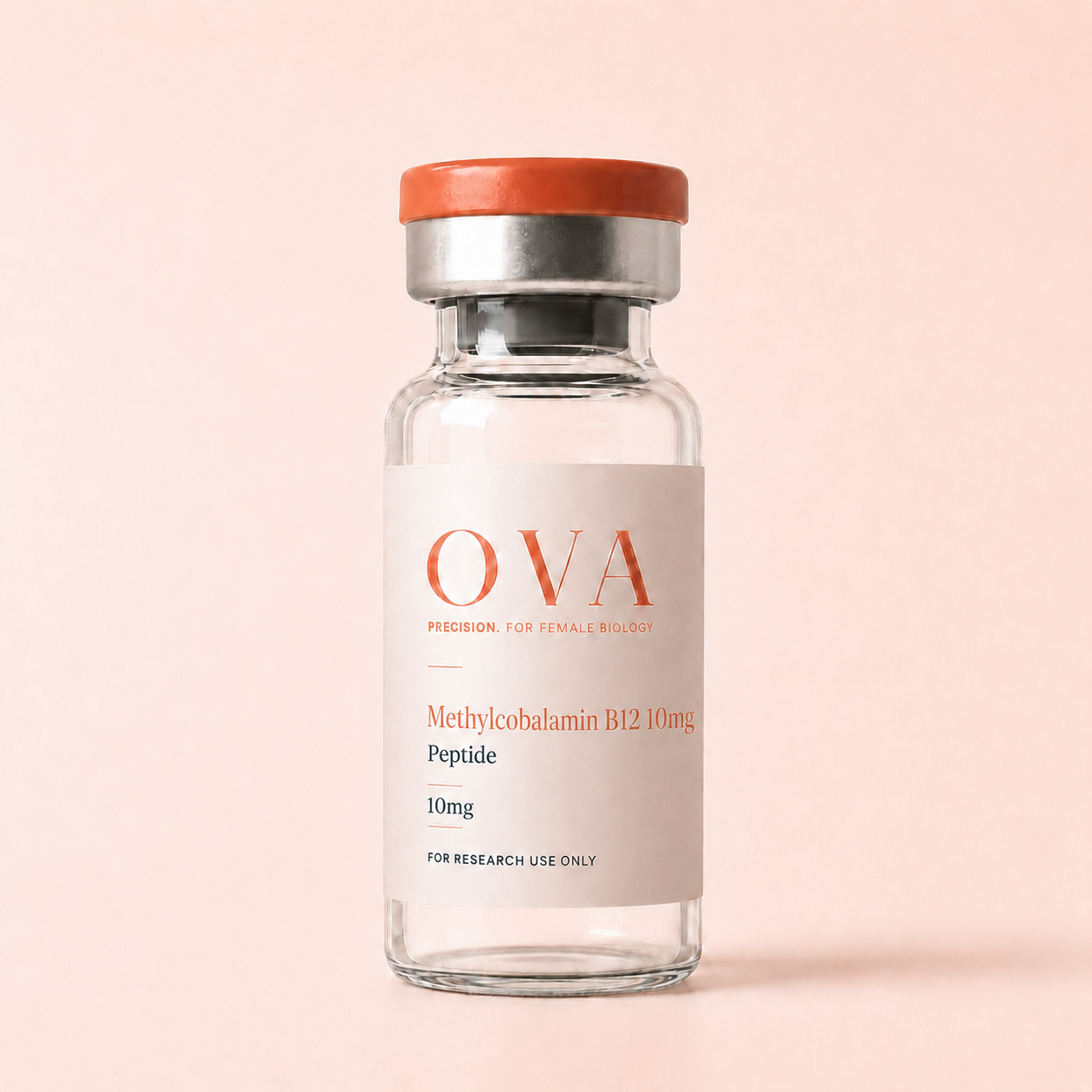
Methylcobalamin is one of two active coenzyme forms of vitamin B12 (the other being adenosylcobalamin). Unlike cyanocobalamin — the form in most oral supplements — methylcobalamin requires no hepatic conversion and is immediately bioavailable for its two primary biochemical roles: methionine synthesis (as a cofactor for methionine synthase, the enzyme that converts homocysteine to methionine) and myelin synthesis (as a critical component of the methylation cycle that supports nerve sheath integrity and repair).
For women, B12 deficiency is more common than generally recognized — particularly in those on plant-forward diets, those using oral contraceptives (which deplete B12 via folate pathway competition), women with MTHFR variants affecting methylation, or anyone with GI absorption issues. Neurological symptoms of B12 insufficiency — brain fog, peripheral tingling, fatigue, mood dysregulation — overlap significantly with perimenopausal symptoms, making injectable methylcobalamin a clinically useful intervention that addresses a frequently overlooked deficiency.
Injectable methylcobalamin bypasses gastric absorption entirely, achieving serum concentrations 10–100x higher than oral supplementation at equivalent doses. At the 10mg vial size, this supports multiple injection sessions for systematic B12 repletion.
Female-calibrated dosing: 1–2mg intramuscularly or subcutaneously 3x/week for 4 weeks (repletion), then 1mg weekly for maintenance. Can be stacked with glutathione for combined methylation and antioxidant support. Women with MTHFR variants may require higher or more frequent dosing.
Storage: Store lyophilized powder or liquid formulation at 2–8°C. Protect from light — methylcobalamin is photosensitive. Discard if colour changes from pink/red to brown.





Reviews
There are no reviews yet.