Description
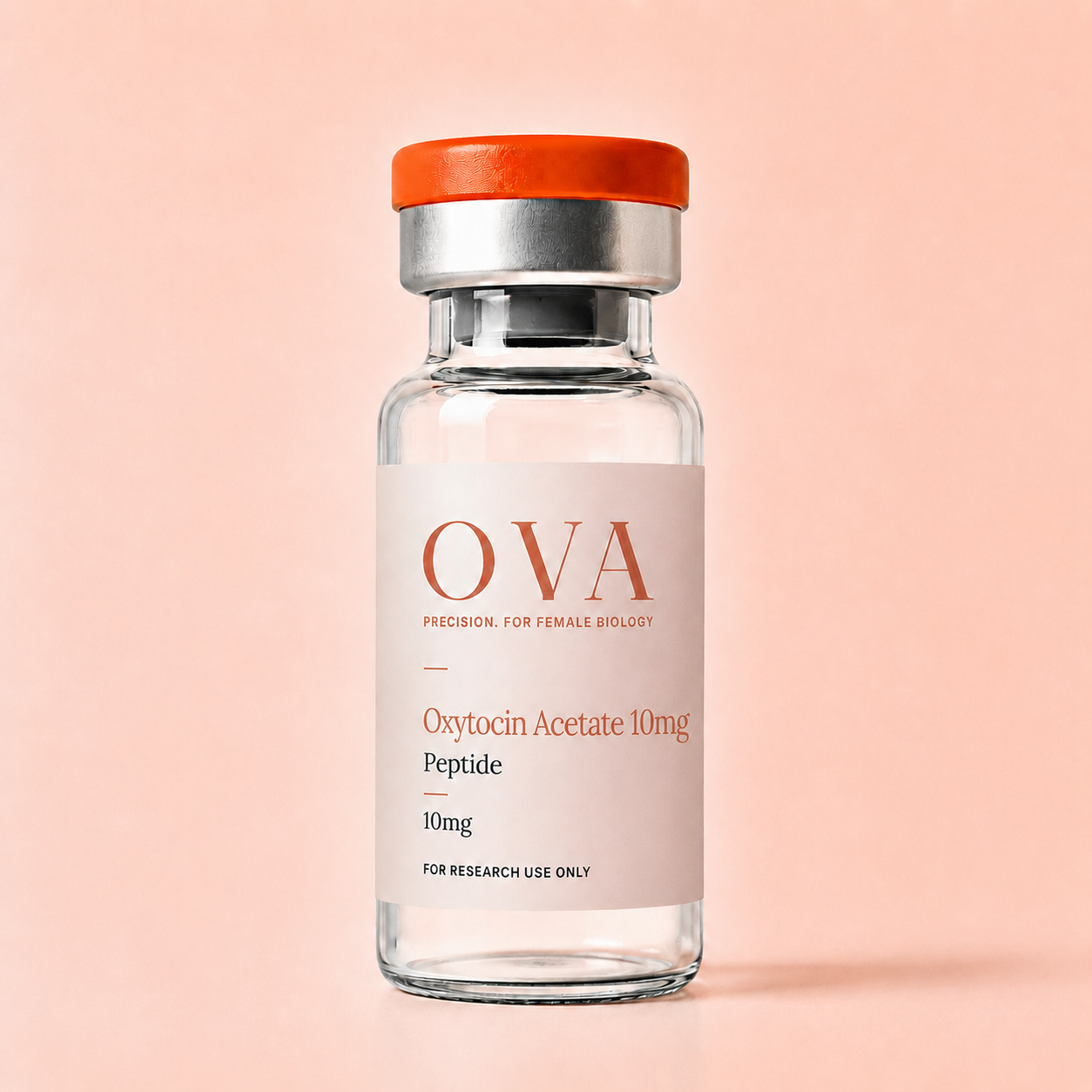
Oxytocin is a hypothalamic nonapeptide with receptors throughout the brain, uterus, breast tissue, and cardiovascular system. Its most studied roles in women include triggering uterine contractions during labour, stimulating milk let-down during breastfeeding, and modulating social bonding and trust via central nervous system effects. Less discussed but well-documented: oxytocin has anti-inflammatory properties, reduces cortisol response to stress, and modulates pain processing in ways particularly relevant to menstrual pain and chronic pelvic discomfort.
In the context of female cycle health, oxytocin signalling plays a role in the late luteal phase and menstrual onset — the uterine contractions of menstruation are partially oxytocin-driven. Disrupted oxytocin signalling has been associated with dysmenorrhea, anxiety spikes in the premenstrual phase, and difficulty with postpartum mood regulation. As a research compound, oxytocin acetate is being explored for stress-axis modulation, social anxiety, and cyclical mood symptoms.
Female-calibrated dosing: 5–20 IU intranasally or subcutaneously. Intranasal delivery produces rapid CNS effects; subcutaneous delivery produces more peripheral (uterine, cardiovascular) effects. Dosing is highly context-dependent — this is an advanced protocol. Work with a practitioner. Half-life is short (1–6 minutes intravenous; longer subcutaneous).
Storage: Store lyophilized powder below -20°C. After reconstitution, refrigerate at 2–8°C and use within 30 days. Sensitive to temperature — handle with care.



Reviews
There are no reviews yet.